“James — quick one. I have whey after training, but my mate swears by casein before bed. Is he onto something or is it just another tub to buy? — Rob, Nottingham”
In this article
Rob’s question is the whole whey vs casein debate in miniature, and the answer is more interesting than most supplement debates — because here, unlike the concentrate-vs-isolate argument, there is a real physiological difference. It’s just smaller and more situational than the marketing suggests. I’ve used both for the better part of a year: whey around training, casein before bed. Here’s what’s actually different, what isn’t, and whether you need both tubs.
Digestion Speed: The One Difference That Matters
Whey and casein are both milk proteins — they come from the same cow, separated during cheese-making. Whey is the fast one: it empties from the stomach quickly and spikes blood amino acids within an hour, then fades over 3–4 hours. Casein is the slow one: it clots in stomach acid (yes, really — it forms a gel), trickling amino acids into the blood over 6–8 hours.
Think of whey as a firework and casein as a candle. Same total light, completely different delivery. Every claimed advantage of either protein traces back to this single difference — there is no other meaningful distinction. Same amino acid family, similar leucine content (whey slightly higher), similar price bracket. Speed is the story.
Whey vs Casein by the Numbers
| Whey (concentrate) | Micellar casein | |
|---|---|---|
| Protein per 30g scoop | 21–24g | 22–26g |
| Amino acid delivery | Peak in ~1 hour, gone by ~4 | Steady over ~6–8 hours |
| Leucine (the muscle trigger) | Slightly higher (~2.5g) | Slightly lower (~2.2g) |
| Satiety | Good | Better — the gel effect keeps you fuller |
| Mixability | Easy, thin | Thick — gloopy if you’re not ready for it |
| Typical UK price per kg | £18–22 | £22–28 |
| Best in | Shakes, oats, smoothies | Bedtime shakes, puddings, baking |
The satiety row deserves a second look: casein’s slow digestion makes it genuinely more filling, which is why it has a quiet second career as a dieting tool. A casein pudding at 9pm (casein + a little milk, left to thicken) is one of the most effective anti-snacking devices I know — it sits like a meal.
Which Is Better for Building Muscle?
The honest answer: roughly equal, over 24 hours, at equal protein intakes. Whey wins the short-term studies — it spikes muscle protein synthesis higher in the hours after drinking. Casein wins some longer studies — its slow trickle seems to reduce muscle breakdown overnight. Net muscle gain over weeks and months? The research calls it a draw, with a slight whey edge in some trials and a slight casein edge in others.
What this means practically: if you could only have one tub, make it whey — it’s cheaper, more versatile, mixes better, and the evidence base for post-training use is deeper. Casein is a specialist: it earns its place in exactly one slot (before bed) and as a satiety tool while dieting. Anyone telling you to replace all your whey with casein is selling you something.
The Examine.com protein guide has the head-to-head trial summaries if you want to check my “roughly a draw” verdict against the data.
When Each One Wins
| Situation | Winner | Why |
|---|---|---|
| Post-workout shake | Whey | Fast amino spike when muscles are primed; mixes thin for quick drinking |
| Before bed | Casein | 6–8 hour trickle feeds overnight repair; the one clear win |
| Meal replacement while dieting | Casein | Superior fullness per calorie — genuinely noticeable |
| In oats / porridge | Whey | Melts in; casein goes gloopy in hot oats |
| Baking / protein pudding | Casein | Thickens beautifully — the gloopy texture becomes an asset |
| Budget: one tub only | Whey | Cheaper, more versatile, deeper evidence base |
How I Use Both
My current routine, refined over a year of both tubs: whey in the morning oats (it disappears into porridge), whey or nothing around training depending on meal timing, and casein at night — 35g stirred into 200ml milk, left five minutes to thicken, eaten with a spoon like a pudding. The bedtime casein is the habit I’d keep if forced to choose one: I sleep through the night without the 3am hunger wake-ups I used to get, and whether that’s the slow amino trickle or just a full stomach, I’ll take it.
Do you need both? No. Whey alone plus a pre-bed snack of Greek yoghurt or cottage cheese (both naturally casein-rich — casein is the main protein in dairy) covers 95% of the benefit for zero extra tubs. I buy the casein tub because I like the pudding ritual, not because the science demands it. Honesty matters more than upsells here.
Cost-wise, running both tubs adds roughly £8–10 a month over whey alone at my usage. The Protein Cost Calculator will tell you exactly what your own habit costs per gram — worth running before committing to a two-tub life. And for the broader supplement picture, the British Nutrition Foundation keeps a level head about what supplements can and can’t do.
The No-Tub Option: Dairy Does the Same Job
Before you buy a second tub, consider the original slow protein: dairy. Casein is the main protein in milk — roughly 80% of milk protein is casein — which means several everyday foods are already “casein supplements” in disguise:
| Food | Protein | Casein share | Cost |
|---|---|---|---|
| Cottage cheese, 200g | ~20g | Mostly casein | ~£0.80 |
| 0% Greek yoghurt, 200g | ~20g | Mostly casein | ~£0.85 |
| Semi-skimmed milk, 500ml | ~17g | ~80% casein | ~£0.55 |
| Casein powder, 35g scoop | ~26g | ~100% | ~£0.75 |
A bowl of cottage cheese with honey before bed, or 500ml of warm milk — the old-school bodybuilder’s nightcap — delivers the slow-trickle effect with zero supplement spend. The powder’s advantages are concentration (more protein per spoonful) and the pudding texture, not some unique property. If budget matters, the dairy aisle beats the supplement aisle here.
One caveat: the same lactose logic from the whey article applies in reverse — milk’s casein comes with lactose, so very lactose-sensitive people may still prefer the powder (most casein powders are low-lactose). Everyone else: try the cottage cheese first. If you love the ritual, then buy the tub.
What I Told Rob: The Verdict
Rob’s question — is my mate onto something with bedtime casein, or is it just another tub? — got this reply, slightly tidied up:
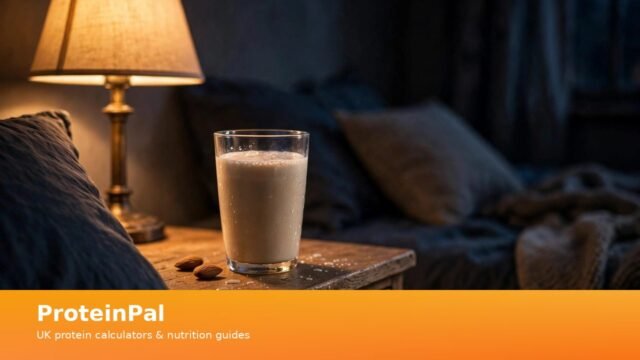
“He’s onto something, but it’s a small something. The bedtime casein idea is one of the better-supported tricks in the supplement world — slow protein overnight, slightly better recovery, and you wake up less hungry. But it’s maybe a 2–3% improvement on a good routine, not a transformation. If you’ve got £25 spare and you like the idea of a pudding before bed, go for it. If money’s tight, 200g of cottage cheese does 90% of the same job for 80p. Either way, keep the whey — that’s the workhorse.”
He bought the cottage cheese. Three months later he reported the 3am wake-ups had stopped and his bench was up 5kg — though, as I told him, the bench was probably the programme, not the cheese. The lesson generalises: supplements are the final 5%. Rob’s mate wasn’t wrong about casein; he was just emphasising the garnish while most people haven’t cooked the meal. Get your 1.6–2.0g/kg from food, train progressively, sleep properly — and then optimise the bedtime slot if you enjoy it.
That’s the honest take after a year of both tubs: whey is the one I’d rescue from a fire, casein is the one I enjoy having around, and neither of them ever built a gram of muscle that food and training wouldn’t have built anyway.
Whey vs Casein Questions
Whey vs casein protein: which is better overall?
For most people, whey — cheaper, more versatile, better studied. Casein is better at exactly two things: overnight feeding and satiety. “Overall winner” framing misses the point; they’re tools for different jobs.
Can I take casein in the morning?
You can, but it’s the wrong tool — slow protein when you want fast recovery fuel. Save casein for bedtime or dieting-daytime use; use whey (or food) around training and breakfast.
Is casein good for weight loss?
Genuinely one of its best uses. The thick, slow-digesting gel keeps you full for hours — a casein pudding is far more satisfying per calorie than a whey shake. If evening snacking is your downfall, casein earns its tub.
Does casein help you sleep?
Indirectly. There’s no sedative effect, but going to bed full prevents hunger wake-ups, and the slow amino supply supports overnight recovery. The milk itself contains small amounts of sleep-associated compounds, but don’t oversell it — it’s the fullness doing the work.
Can I just eat cottage cheese instead of casein powder?
Yes — cottage cheese and Greek yoghurt are naturally rich in casein (it’s the main milk protein). 200g of cottage cheese before bed (~20g protein, mostly casein) replicates most of the benefit. The powder is just convenience and concentration.
Is it OK to have both in one day?
Completely. They’re both milk proteins; your body doesn’t care about the label. Whey after training plus casein before bed is probably the most evidence-aligned supplement routine there is — modest in effect, but coherent.