How much protein for glute growth? Here is the number up front: 1.6 to 2.2 grams of protein per kilogram of bodyweight per day. For a 65 kg woman training her glutes properly, that works out to roughly 105–143 g of protein daily, spread over three or four meals. That range comes from the wider muscle-building research, and your glutes are muscle tissue like any other — they follow exactly the same rules.
In this article
- The target: how much protein for glute growth, in grams per day
- Your number, looked up: daily targets by bodyweight
- Per-meal splits that actually work
- Surplus or recomposition? The calorie question
- Training: the half of the equation protein can't fix
- Mistakes that waste your protein budget
- Frequently asked questions
But the number alone will not build anything. Protein is the raw material; your training decides where it goes. Eat 150 g a day and skip lower-body sessions, and your glutes will not grow a millimetre. I am James Miller, a UK-based fitness nutrition writer, and I have watched plenty of women nail their protein and still stall for months. Almost every time, the missing piece was not the food — it was the training link nobody talks about. This article gives you the exact gram targets, sensible meal splits, and that missing link.
The target: how much protein for glute growth, in grams per day
The 1.6–2.2 g/kg range is not glute-specific magic. It is where the evidence for muscle protein synthesis tends to level off in people doing resistance training. Below about 1.6 g/kg, most lifters leave growth on the table. Above roughly 2.2 g/kg, the extra protein stops buying you extra muscle and just becomes expensive calories.
So your personal target sits inside that window, and where exactly depends on your situation:
- New to training or in a small calorie surplus: aim for the top of the range, around 2.0–2.2 g/kg. Beginners build muscle quickly and a surplus gives your body the energy to do it.
- Experienced, maintaining weight: around 1.8 g/kg is a solid middle ground.
- Dieting or in a deficit: push towards 2.2 g/kg or a touch above. When calories are low, protein protects the muscle you have — including your glutes — while you lose fat.
Notice what is not on that list: a special “glute protein” number. Anyone selling you one is selling you something. The gluteus maximus is the largest muscle in your body, which means it is hungry for protein, but it does not need a different formula from your quads or your back. If you want a personalised figure rather than a range, run your numbers through a protein calculator — it takes about thirty seconds and beats guessing.
Your number, looked up: daily targets by bodyweight
Ranges are useful; exact numbers are better. The table below multiplies common bodyweights by 1.6, 1.8 and 2.2 g/kg so you can find your row and pick the column that matches your situation.
| Bodyweight | 1.6 g/kg (minimum for growth) | 1.8 g/kg (middle ground) | 2.2 g/kg (dieting or maximising) |
|---|---|---|---|
| 55 kg | 88 g | 99 g | 121 g |
| 60 kg | 96 g | 108 g | 132 g |
| 65 kg | 104 g | 117 g | 143 g |
| 70 kg | 112 g | 126 g | 154 g |
| 75 kg | 120 g | 135 g | 165 g |
| 80 kg | 128 g | 144 g | 176 g |
A quick worked example. Say you weigh 68 kg and you are eating in a slight surplus while running a glute-focused programme. Pick 2.0 g/kg as your multiplier:
That is your anchor number. Everything else — meal splits, food choices, whether you need a shake — hangs off it. Write it down somewhere you will actually see it, because “eat more protein” as a vague intention has never built anyone’s glutes.
Per-meal splits that actually work
Total daily protein matters most, but spreading it sensibly helps. Muscle protein synthesis responds best when each meal delivers a decent dose — roughly 0.3–0.4 g/kg, which for most women lands around 25–40 g per meal. Four moderate hits beat one enormous dinner and a sad 10 g breakfast.
Here is what that looks like in practice for three common targets:
| Daily target | 3 meals | 4 meals |
|---|---|---|
| 110 g | ~37 g per meal | ~28 g per meal |
| 130 g | ~43 g per meal | ~33 g per meal |
| 150 g | ~50 g per meal | ~38 g per meal |
The classic mistake is the one I see constantly: a protein-free breakfast (toast and jam, maybe 6 g), a light lunch, then a heroic 70 g dinner to “catch up”. Your body does not keep a perfect running tab. Front-load the day. Greek yoghurt with granola at breakfast, chicken or tofu at lunch, and suddenly dinner does not have to do all the heavy lifting.
If your schedule makes four proper meals unrealistic, three bigger ones are completely fine — the difference between three and four feedings is small compared with the difference between hitting your total and missing it by 40 g. A per-meal protein planner can map your target across your actual eating pattern instead of some idealised plan you will abandon by Thursday.
Surplus or recomposition? The calorie question
Here is the uncomfortable truth about building bigger glutes: protein without enough calories is like delivering bricks to a building site with no workers. Muscle growth is an energy-expensive process. If you are eating well below maintenance, your body prioritises keeping the lights on over building new tissue, and your glutes stay exactly where they are no matter how much chicken you eat.
You have two honest options:
Option 1: a small surplus (best for growth). Eat roughly 100–300 calories above maintenance. That is not a free-for-all — it is an extra snack, not an extra takeaway. At this pace you might gain 0.25–0.5 kg per month, mostly lean tissue if your training is on point. This is the fastest route to visibly bigger glutes.
Option 2: recomposition (slower, leaner). Eat at roughly maintenance calories with high protein and progressive training. Beginners and people returning after a break can genuinely build glute muscle while losing a little fat at the same time. It is slower than a dedicated surplus, but you stay lean throughout.
What does not work is aggressive dieting plus glute goals. A 700-calorie deficit and dreams of a bigger backside are pulling in opposite directions. Pick one goal per phase. If you do not know your maintenance calories, a TDEE calculator will estimate them from your stats and activity — then add your small surplus on top.
Training: the half of the equation protein can’t fix
This is the missing link I mentioned. Protein provides amino acids; training provides the signal that tells your body to assemble those amino acids into glute muscle. No signal, no construction — the protein just gets burned as energy or stored.
What the signal needs to look like:
- Train glutes 2–3 times per week. Once a week is maintenance territory for most people. The gluteus maximus is a big, strong muscle that recovers well — it can handle frequency.
- Progressive overload, actually tracked. “I did glutes” is not a programme. More weight, more reps, or more sets over time — written down — is. If your hip thrust has used the same weight since March, your glutes have had no reason to grow since March.
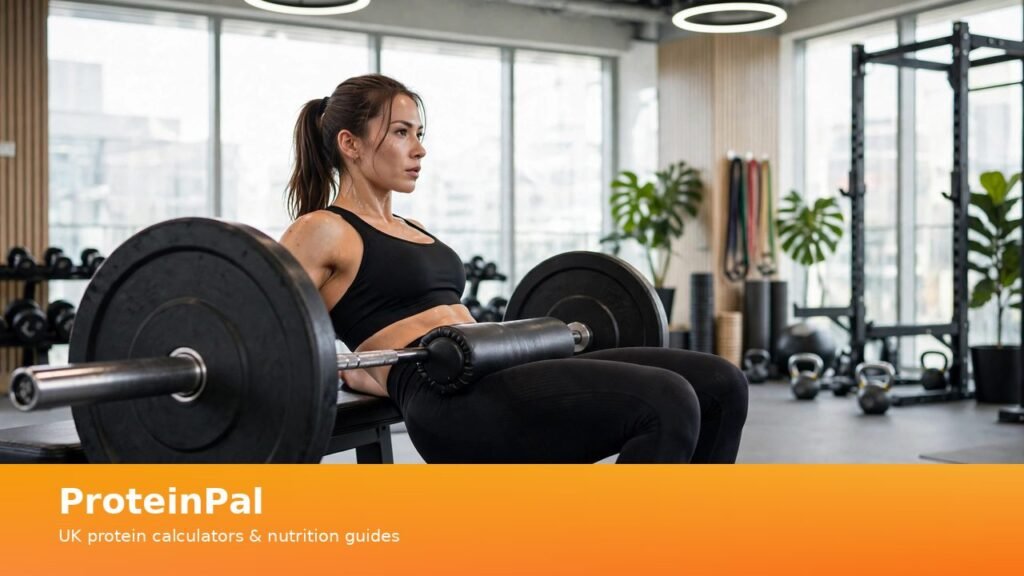
- Compound movements first. Hip thrusts, Romanian deadlifts, squats, lunges and step-ups load the glutes heavily. Kickbacks and band work have their place as finishers, but they cannot carry a programme alone.
- Eat around your training. Having 25–40 g of protein in the meal before or after your lower-body session is sensible practice. The old “anabolic window” panic is overblown, but training fed beats training fasted for most people.
I once coached a friend through this exact frustration. Her food diary was immaculate — 140 g of protein daily at 64 kg. Her training? One weekly “leg day” that was mostly leg press with her phone in her hand. We moved her to two proper glute sessions with progressive hip thrusts, changed nothing about her diet, and eight weeks later her jeans told the story. The protein was always there. The signal was not.
Mistakes that waste your protein budget
A few traps I see repeatedly, all fixable:
- Chasing protein but fearing calories. If you are scared of the surplus, you cap your growth. A 200-calorie surplus will not make you “bulky” — building noticeable muscle takes years, not weeks.
- Protein powder as a food group. Shakes are convenient, but two scoops a day on top of a diet with no real food is backwards. Whole foods bring micronutrients, fibre and satiety that powder cannot. One shake a day to plug a gap is sensible; three is a diet problem wearing a supplement costume.
- Ignoring sleep. Muscle protein synthesis does a lot of its work overnight. Five hours of sleep with perfect macros will underperform seven hours with decent macros. Boring, but true.
- Programme-hopping. Switching your glute routine every fortnight because an influencer posted a new “booty burner” resets your progressive overload each time. Pick a programme and run it for 8–12 weeks.
Get the big rocks right — daily total in the 1.6–2.2 g/kg range, 2–3 hard glute sessions a week, slight surplus or honest recomposition — and the details take care of themselves. For a broader look at how protein targets shift with your goal, Examine’s protein intake guide summarises the research well, and the NHS Eatwell guidance covers the balanced-diet foundations your training sits on.
Frequently asked questions
Can I build glutes in a calorie deficit?
Beginners sometimes can — recomposition is real in the first 6–12 months of training. But it is slow, and the deeper the deficit, the less building happens. If glute growth is the priority, eat at maintenance or a small surplus and keep protein at the top of the range (around 2.0–2.2 g/kg).
Is 100 g of protein enough for glute growth?
It depends on your weight. At 55 kg, 100 g is about 1.8 g/kg — fine. At 70 kg, it is only 1.4 g/kg, which is below the growth range. Check your row in the table above rather than judging the raw number.
Do I need protein powder to build bigger glutes?
No. Powder is just convenient protein, not magic protein. If you hit your daily target with chicken, fish, eggs, dairy, tofu, lentils and the rest, a shake adds nothing. It earns its place when your schedule makes whole food impractical — post-gym, at work, or on busy days.
How long before I see glute growth?
With consistent training, adequate protein and a small surplus, most women notice measurable change in 8–12 weeks and visible change in 4–6 months. Anyone promising a transformed backside in 30 days is selling a programme, not a result.
Should I eat protein before or after my glute workout?
Total daily intake matters far more than timing, but having 25–40 g of protein within a few hours either side of training is good practice. If you train fasted in the morning, prioritise protein in the meal afterwards.
What are the best protein sources for glute growth?
The ones you will eat consistently: chicken breast, turkey, lean beef, fish, eggs, Greek yoghurt, cottage cheese, tofu, tempeh, lentils and beans. Variety beats perfection — different sources cover different micronutrients.
I am vegetarian — can I still hit 130 g of protein?
Yes, with planning. Dairy and eggs make it straightforward; fully plant-based takes more intent (tofu, tempeh, seitan, lentils, protein powder). Spread intake across four meals and include a leucine-rich source at each one to trigger muscle protein synthesis properly.